
The Interim Budget for 2024-25 (FY25) to be presented on February 1 is likely to assume 10-10.5 per cent nominal gross domestic product (GDP) growth against 8.9 per cent estimated for FY24 by the National Statistical Office (NSO). "We were waiting for the First Advance Estimates GDP numbers for FY24. "We will finalise the nominal GDP growth assumption for FY25 Interim Budget in a couple of days.
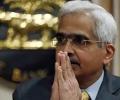
Reserve Bank Governor Shaktikanta Das on Friday stressed that the monetary policy must remain actively disinflationary to ensure that the decline in inflation from its peak of 7.44 per cent in July continues smoothly. Addressing the Kautilya Economic Conclave 2023, he also said price stability and financial stability complement each other and it has been an endeavour at RBI to manage both efficiently. Retail inflation declined to a three-month low of 5.02 per cent annually in September on account of moderation in vegetables and fuel prices, and was back within the Reserve Bank's comfort level.

'We have lived through 10% plus inflation in India and we are aware of the economic pitfall.' 'With the RBI now having formally adopted an inflation target range, they cannot turn a blind eye to the impending risks.'

Retail inflation during the first month of the current fiscal stood at 2.9 per cent, down from 4.6 per cent a year ago. Food inflation based on Consumer Food Price Index declined to a low of 0.1 per cent during the financial year 2018-19, the survey said.
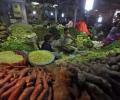
Items such as cereals and products, meat and fish, oils and fats became cheaper

Kotak Mahindra Bank was the biggest loser in the Sensex pack, sliding 2.68 per cent, followed by Tech Mahindra, Mahindra & Mahindra, Axis Bank, Hindustan Unilever, Tata Motors, Tata Consultancy Services, Bajaj Finserv, Bajaj Finance, Nestle and Titan. In contrast, NTPC, Power Grid, Larsen & Toubro, HDFC, Reliance and HDFC Bank were the gainers.

Going forward, the February factory output may be impacted as several industries such as automobiles, technology, pharma and fashion have some exposure to imports of raw and intermediate materials from China.

RBI will be considering this set of data for formulating its next bi-monthly monetary policy on October 5.

The rate of price rise in the food basket contracted by 0.86 per cent in October compared to 0.51 per cent rise in September

'Consider 40% to 50% in equities, 10% in gold as a hedge, and the remaining 30% to 40% split between multi-asset funds and hybrid funds.'

RBI is scheduled to announce the monetary policy for the current financial year on May 3 during which it will take a call on interest rates keeping in view the inflation and other macro-economic parameters like growth rate, industrial production etc.

Overall retail inflation in rural and urban areas stood at 7.38 per cent and 8.25 per cent in January, respectively.

Footwear companies were among the weakest performers in the consumer discretionary sector during the October-December quarter (Q3) of 2024-25. The combined revenue growth of the top four listed firms was just 2.9 per cent year-on-year (Y-o-Y) - the lowest among major discretionary categories.

Retail inflation moved up marginally to 10.36 per cent in May on account of increase in prices of vegetables, edible oils and milk.

The Reserve Bank of India's rate-setting panel will go for a 0.35 per cent hike in the key repo rate at its meeting next week, an American brokerage said on Wednesday. The hike will be accompanied by a change in the policy stance to "calibrated tightening", Bofa Securities said in a report published ahead of the Monetary Policy Committee (MPC) resolution which is set to be announced on August 5. RBI has hiked the rate by a cumulative 0.90 per cent in two tightening moves in May and June, responding to the runaway headline inflation which has consistently overshot the upper end of the target set for the central bank for many months.

The food-price segment in the WPI has been growing at 8.3 per cent, much higher than the rise in the index for manufactured articles. In fact, segments like minerals and fuel have witnessed a decline in the WPI and have pulled the inflation down. The rise in food prices affects the common man more than the increase in prices of any other item.

Central pool of onions to be set up; offences under Essential Commodities Act to be made non-bailable.
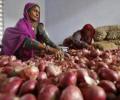
In case of onions, inflation skyrocketed to 127.04 per cent, while for the eggs, meat and fish segment the rate of price rise was 5.76 per cent.

Retail inflation declined marginally to 9.86 per cent in July due to lower prices of spices, cereals and its products although prices of vegetables remained high during the month.

India's factory output climbed 22.4 per cent in March, benefiting from the base effect of the lockdown-marred month a year back as well as a turnaround in the manufacturing sector, while retail inflation slipped to a three-month low of 4.29 per cent in April. The high positive annual growth in the index of industrial production (IIP) in March 2021 came on back of a contraction of (-)0.9 per cent and (-)3.4 per cent in January and February 2021 respectively, according to the data released by the National Statistical Office (NSO) on Wednesday. This turnaround was led by recovery in the mining, manufacturing and electricity sectors.
Two leading economists associated with the multi-commodity exchange have pointed to serious flaws in the present method of calculating inflation and called for a change in line with prevalent methodologies in developed economies.

Food prices probably fueled a sharp rise in India's retail inflation in December after the record low struck the previous month.

Slowing inflation prompted the RBI to cut the policy repurchase rate last month by 25 basis points to 6.50 percent, the lowest since 2011.
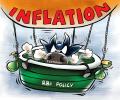
With pricing power of producers unlikely to strengthen and commodities ex-crude oil likely to remain sluggish in the immediate term, the core-WPI inflation may remain sub-zero in the rest of this calendar year.

Retail inflation fell to a five-month low of 4.35 per cent in September from 7.27 per cent in the year-ago period as prices of vegetables and other items declined, according to government data released on Tuesday. The moderation in Consumer Price Index-based inflation is in line with the assessment of Reserve Bank Governor Shaktikanta Das who recently projected substantial softening of retail inflation. The CPI inflation was at 5.3 per cent in August and at 7.27 per cent in September 2020.
As per the data released by the NSO, the overall food inflation rose to 14.12 per cent in December as against (-) 2.65 per cent in the same month of 2018.
Is the general increase in price rise affecting you? has your monthly budget gone for a toss? How are you coping with increase in prices of essential goods of daily use? Share your views with us.

The Producer Price Index will be better able to measure the average change over time in the sale prices of domestic goods and services, the Reserve Bank Governor said.

Arguing that the recent elevation in retail inflation is not structural but supply-driven and therefore potentially transitory, a foreign brokerage report has forecast that the benign interest rate regime will continue at least until next June. The assessment comes a day ahead of the third bimonthly monetary policy review on Friday wherein it's widely expected that the monetary authority will leave the key rates unchanged at 4 per cent even though the consumer prices have been on remaining above 6 per cent since May and crude prices have been north of $70 a barrel for months.

The hike in prices of these items has come about over and above milk, onion, garlic, and other vegetables which have become expensive in the past few weeks.

Potato, a daily consumable vegetable, witnessed maximum inflationary pressure at 60.58 per cent

The RBI has changed the way it approached supervision in the past. Having seen a couple of collapses in the NBFC sector and the near-collapse of a few banks, it is focusing on regular drills to prevent a fire from breaking out, explains Tamal Bandyopadhyay.

Pushed by rising prices of essential kitchen items, the retail inflation rose to an eight-month high of 7.34 per cent in September, making the RBI's task to push growth by reducing the interest rate even more difficult in coming the days. The Consumer Price Index (CPI)-based inflation was 6.69 per cent in August and 3.99 per cent in September 2019. Inflation has been hovering above 4 per cent since October 2019.

This could be the reason why Prime Minister Narendra Modi mentioned tomato, onion, and potato as his government's 'TOP' priority, in an election rally on February 5 in poll-bound Karnataka.

'A possible post-election growth momentum may be lost.'

Retail inflation in April softened further and fell to a four-month low of 4.87 per cent.

The rupee resumed lower at 61.15 per dollar as against the last weekend's level of 61.07 at the Interbank Foreign Exchange market and hovered in the range of 61.15 and 61.28 before quoting at 61.24 per dollar at 1030 hours.

While the farmers are not getting remunerative prices for their produce, at the same time they are forced to pay high prices for items they consume.

Industrial ouput, however, was seen falling 0.6 per cent in January

Why has the shift from ICE to electric slowed down despite initial enthusiasm?
 © 2026 Rediff.com - Advertise with us - Disclaimer - Privacy Policy - Sitemap - Feedback - About us - Terms of use - Grievances